
Introduction
Table of Contents
What Is Virtual Reality (VR)?
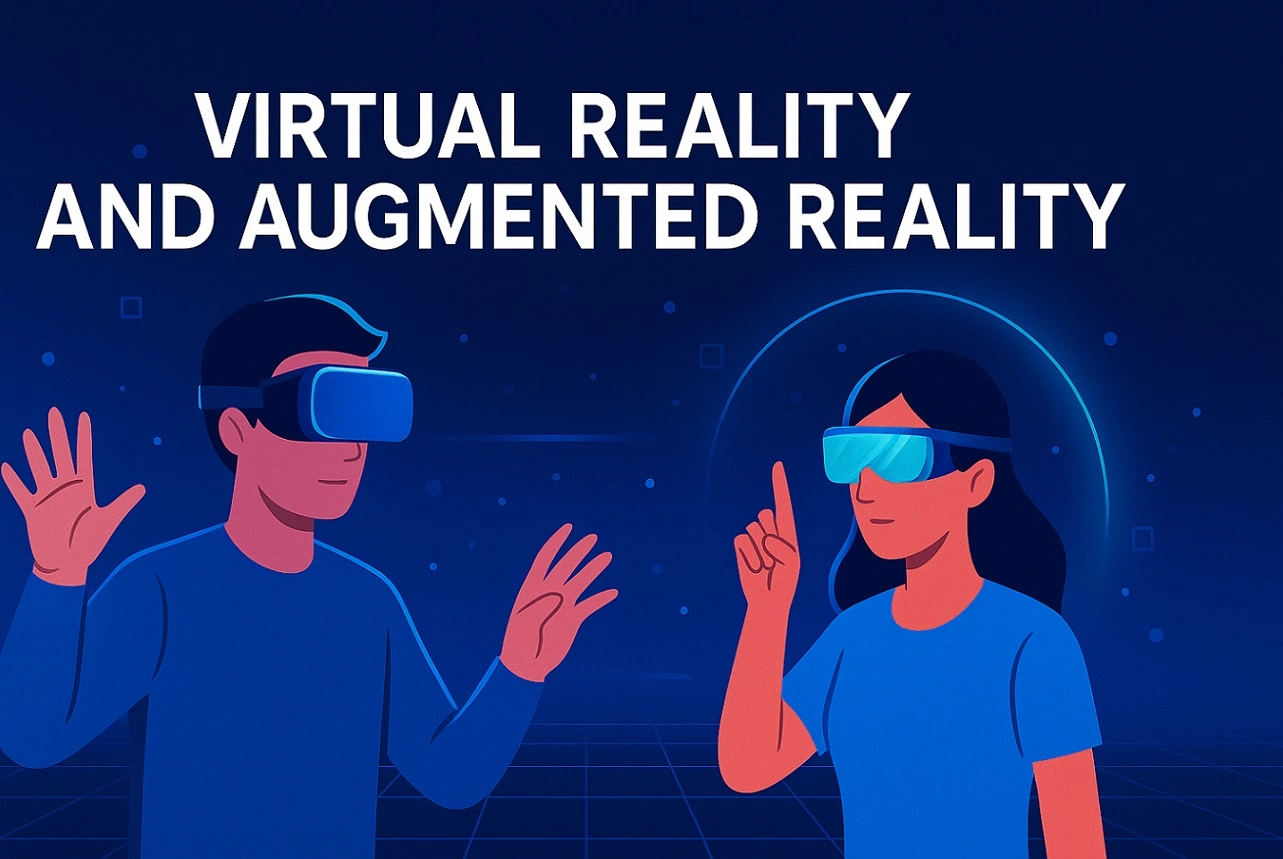
Virtual Reality (VR) creates a simulated environment that surrounds the user with digital content. Headsets such as Meta Quest, HTC Vive, and PlayStation VR allow users to explore lifelike 3D spaces that respond to motion and sound. Instead of simply viewing a screen, users are part of the scene seeing, hearing, and even interacting inside digital worlds.
- Gaming: Players are transported into alternate realities for fully interactive adventures.
- Education: Students explore history, space, and science through immersive experiences.
- Healthcare: Surgeons practice delicate procedures in digital simulations to improve accuracy.
- Corporate Training: VR-based lessons help employees develop skills safely and effectively.
With global leaders investing in research and development, Virtual Reality continues to redefine innovation and human engagement.
What Is Augmented Reality (AR)?
Augmented Reality (AR) enriches the real world by overlaying digital information text, images, or 3D graphics onto physical environments. Using smartphones, tablets, or Microsoft HoloLens, users can experience a mix of real and virtual interaction. A well-known example, Pokémon GO, demonstrated the power of AR in blending fun, movement, and technology.
- Retail: Brands use AR to let customers try on clothes or visualize furniture before buying.
- Medicine: Doctors use AR imaging for guided surgery and medical training.
- Engineering: AR overlays help technicians visualize complex designs and repairs.
- Education: Teachers use AR visuals to make abstract lessons interactive and engaging.
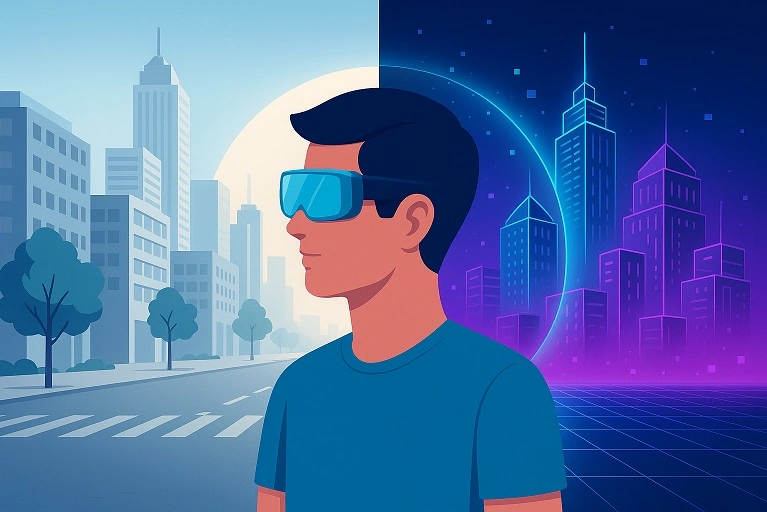
Unlike VR, which replaces reality, Augmented Reality enhances it creating a powerful bridge between the digital and physical worlds.
Key Differences Between VR and AR
| Feature | Virtual Reality (VR) | Augmented Reality (AR) |
|---|---|---|
| Experience Type | Fully immersive digital environment | Real world with digital overlays |
| Devices | VR headsets and controllers | Smartphones or AR glasses |
| Purpose | Simulation and exploration | Enhancement and visualization |
| User Presence | Inside the virtual world | Connected to the real environment |
The Future of Virtual Reality and Augmented Reality
The integration of Virtual Reality and Augmented Reality, known as Mixed Reality, is driving the development of the Metaverse a shared digital space for learning, working, and entertainment. According to Statista, the global market for immersive technology is expected to exceed $250 billion by 2030, powered by AI, 5G, and wearable devices.
- Real Estate: Buyers can take interactive virtual tours before purchasing property.
- Tourism: Travelers explore destinations virtually before booking.
- Healthcare: AR-guided surgeries and VR therapy enhance patient recovery.
- Education: Interactive classrooms use immersive learning to boost engagement.
As adoption grows, Virtual Reality and Augmented Reality will continue to reshape how we communicate, collaborate, and experience digital transformation.
Challenges and Ethical Considerations
While the benefits are vast, Virtual Reality and Augmented Reality bring challenges. Long-term usage may cause fatigue or motion sickness, and equipment costs can be restrictive. Privacy concerns also arise as AR devices capture real-world visuals. Developers and policymakers must ensure these tools evolve responsibly, prioritizing safety and ethical use. Read about data protection in immersive tech on World Economic Forum.
Final Thoughts
Virtual Reality and Augmented Reality are reshaping how humans interact with the digital world. They drive innovation in education, healthcare, design, and communication turning imagination into reality. As accessibility improves and technology evolves, these tools will become part of daily life. Explore more future-focused content in our Future Tech section for updates on how innovation is changing the world.