
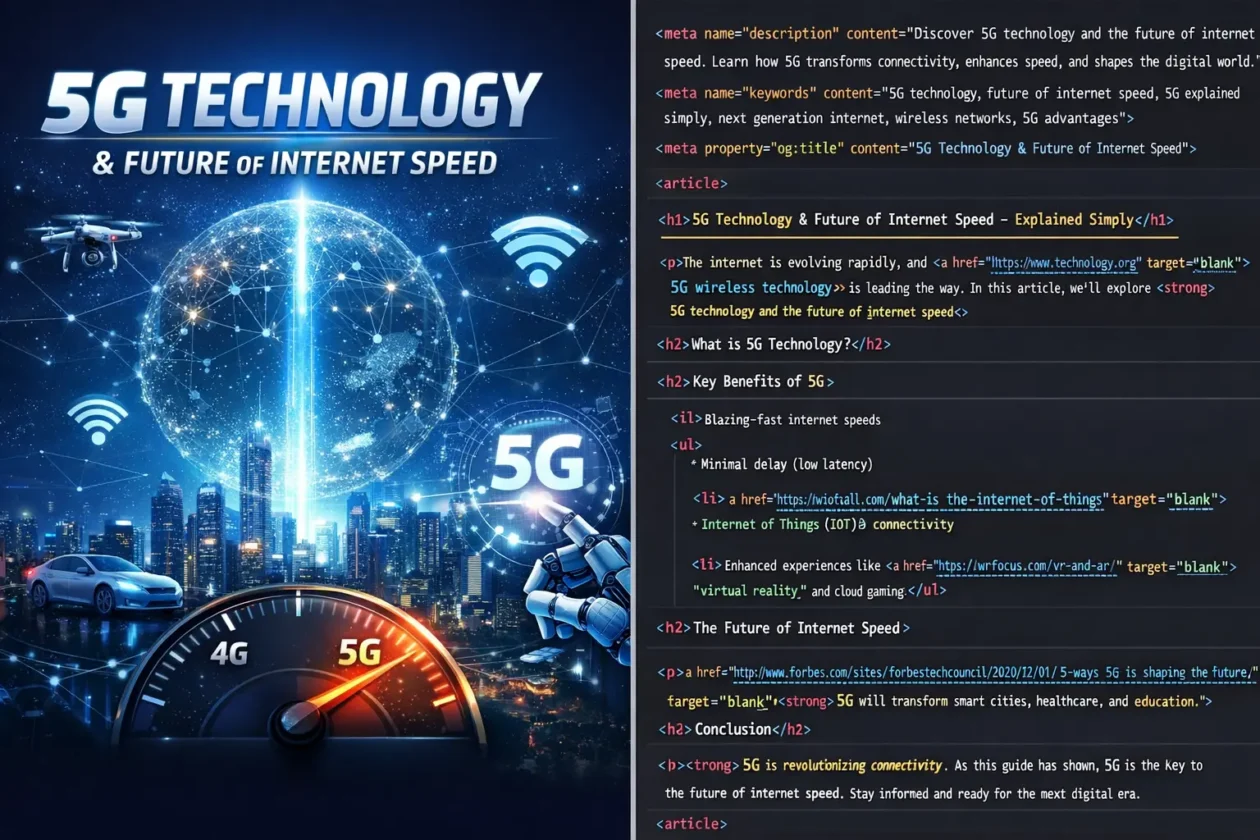
5G Technology & Future of Internet Speed is one of the most searched topics because people want faster browsing, smoother streaming, and instant online experiences. This guide explains 5G technology in simple words and shows how it is shaping the future of internet speed.
Table of Contents
What Is 5G Technology?
5G technology means the fifth generation of wireless network technology. It is built to deliver higher speed, lower delay (latency), better stability, and stronger support for large numbers of devices. In simple terms, 5G is designed to make the internet feel faster and more responsive—especially during busy usage times.
Earlier generations improved mobile browsing and video streaming. But 5G technology is also made for future digital needs like connected devices, smart systems, real-time communication, and advanced online services. That’s why people connect 5G technology with the future of internet speed.
Quick Evolution of Internet Speed
Internet speed has improved step-by-step over time. Each new wireless generation increased performance:
- 2G: basic messaging and slow data
- 3G: better mobile internet for web browsing
- 4G: fast streaming, apps, and HD video
- 5G: ultra-fast speed, ultra-low latency, and smarter connectivity
This is why the phrase 5G Technology & Future of Internet Speed matters: it’s not just a small upgrade—it’s a new foundation for next-generation digital life.
How 5G Works (Explained Simply)
5G uses advanced wireless methods to send data more efficiently. Instead of relying on older network styles, 5G can use smarter signal control and new frequency ranges. The result is:
- Faster download and upload speeds
- Less lag when you click, play, or stream
- Better performance in crowded areas
- More reliable connections for multiple devices
Even if you don’t understand the technical details, the key point is simple: 5G technology is optimized for speed and responsiveness, which directly supports the future of internet speed.
5G vs 4G: What’s the Real Difference?
Many people ask: “Is 5G really better than 4G?” The simple answer is yes—especially in speed and delay.
| Feature | 4G | 5G |
|---|---|---|
| Speed | Fast | Extremely fast (multi-gigabit possible) |
| Latency (Delay) | Noticeable | Near real-time |
| Device Support | Limited | Massive (IoT-ready) |
| Network Efficiency | Moderate | High |
| Future Use Cases | Basic apps | Smart systems + real-time services |
This comparison shows why 5G Technology & Future of Internet Speed is such a major topic in modern tech discussions.
How Fast Is 5G Internet Speed?
Speed depends on network coverage, device capability, and user load. But 5G is designed to deliver much higher speeds than older networks. That means:
- Large downloads happen in seconds
- High-quality streaming becomes smoother
- Cloud apps load faster
- Video calls become clearer and more stable
For everyday users, 5G feels like removing “waiting time” from the internet. That is the real meaning behind the future of internet speed.
What Is Latency and Why It Matters in 5G?
Latency is the delay between an action and the response. For example, when you tap “play” or “send,” latency is the time it takes to react. High latency causes lag, buffering, and slow response.
One of the strongest benefits of 5G technology is reducing latency. This is critical for:
- Online gaming
- Live streaming and real-time interaction
- Remote work tools
- Smart systems that need instant communication
5G Technology & Future of Internet Speed: Real-World Uses
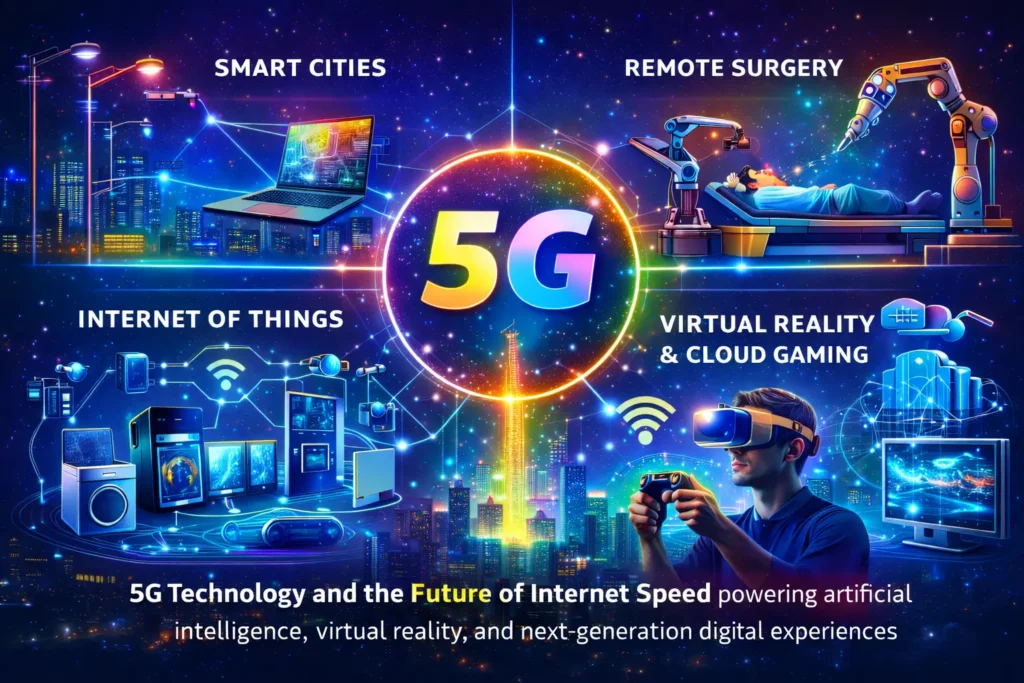
5G is not only about watching videos faster. It enables next-level internet services that require high speed and low latency.
1) Internet of Things (IoT)
IoT means devices connected to the internet—smart watches, smart home systems, sensors, and many other tools. 5G technology supports massive numbers of connected devices without slowing down the network.
Learn more about IoT (Internet of Things).
2) Cloud Computing and Edge Computing
Cloud services store and run apps online instead of on your device. 5G helps cloud computing feel smoother because it reduces delays. It also supports edge computing, where data is processed closer to the user for faster performance.
3) VR, AR, and Immersive Experiences
Virtual reality (VR) and augmented reality (AR) need high speed and low latency to feel realistic. With 5G technology, immersive experiences can load fast and respond instantly.
Official overview of 5G concepts
4) Better Remote Work and Online Collaboration
Remote work depends on stable internet speed. 5G can improve video meetings, real-time collaboration, and cloud workflow—especially when multiple people are connected at the same time.
5) Smart Services and Automation
Many digital systems rely on instant data transfer. 5G supports real-time decision-making, automation, and connected services—helping shape the future of internet speed beyond simple browsing.
Advantages of 5G Technology
- Higher speed: faster downloads and uploads
- Lower latency: near instant response
- Better stability: improved connection in many environments
- Device support: built for large-scale connectivity
- Future readiness: supports next-gen applications
Common Challenges of 5G
Every new technology brings challenges. Some common 5G challenges include:
- New infrastructure requirements
- Compatibility issues with older devices
- Coverage expansion takes time
- Initial rollout can be costly
Over time, these challenges reduce as networks expand and devices improve.
What the Future Looks Like
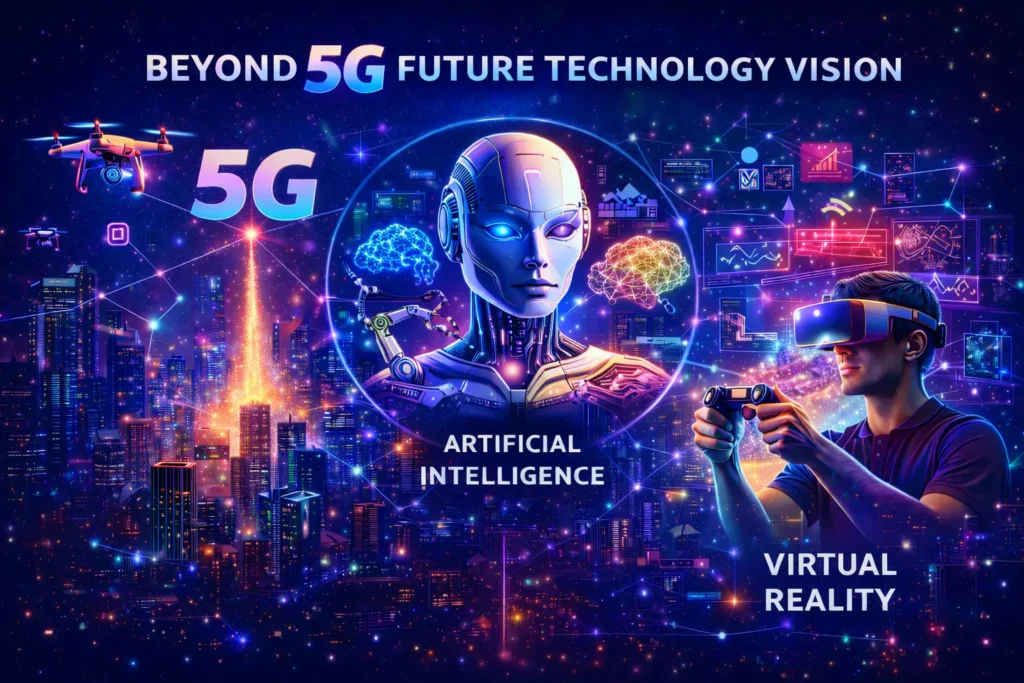
The internet is moving toward faster speed, lower delays, and smarter connectivity. 5G technology is a major step toward that future. In the coming years, digital services will feel more instant, immersive, and reliable. The phrase 5G Technology & Future of Internet Speed will continue to matter because it represents how connectivity is evolving.
Conclusion
5G Technology & Future of Internet Speed is not just a trend—it’s the next stage of modern connectivity. 5G technology delivers faster speed, lower latency, better device support, and improved network performance. From education and remote work to entertainment, cloud apps, and smart systems, 5G is shaping how the internet will work in the future.
If you want to stay ready for the next digital era, understanding 5G technology today is a smart step.
Related on LookPK
- Wi-Fi & Wireless (Browse More)
- Artificial Intelligence (Browse More)
- IP Addressing & Network Basics (Browse More)
- Computer Network (Browse More)