

Cloud Computing has become one of the most essential technologies of the modern digital era. Whether you save photos online, watch Netflix, access Gmail, or store documents in Google Drive cloud technology is working quietly in the background. This beginner-friendly guide explains Cloud Computing in a simple and easy.
Table of Contents
What Is Cloud Computing?
Cloud Computing refers to delivering computing services such as storage, databases, servers, networks, and software over the internet instead of storing and managing them on your personal device or local server. Simply put, you use powerful technology without owning expensive hardware. You access everything online.
Why Is It Called “The Cloud”?
Your phone or laptop has limited storage, but cloud servers store massive amounts of data across global data centers. When you upload a photo to Google Photos, the file is not on your mobile it is stored in a secure cloud server. These remote servers collectively form “the cloud.”
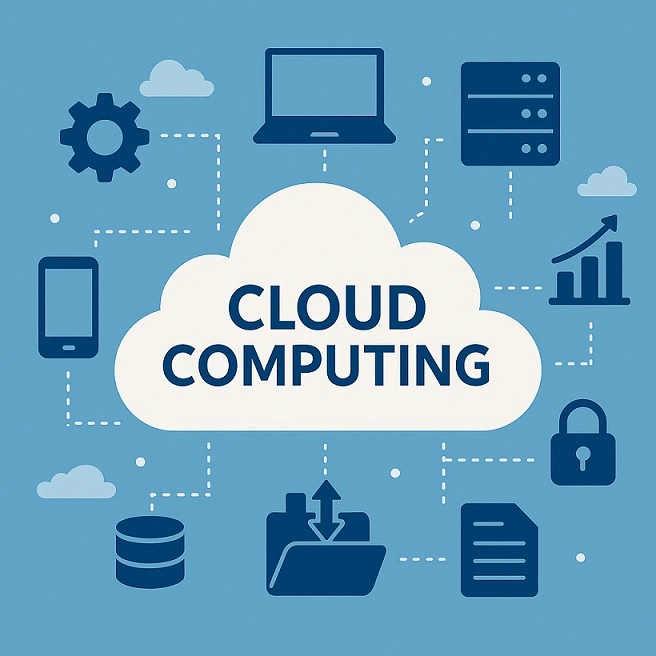
How Cloud Computing Works
Instead of installing software or storing data locally, Cloud Computing allows you to connect to applications and services through websites, mobile apps, or APIs. The cloud provider handles hardware, security, updates, backups, and maintenance letting you focus on your work.
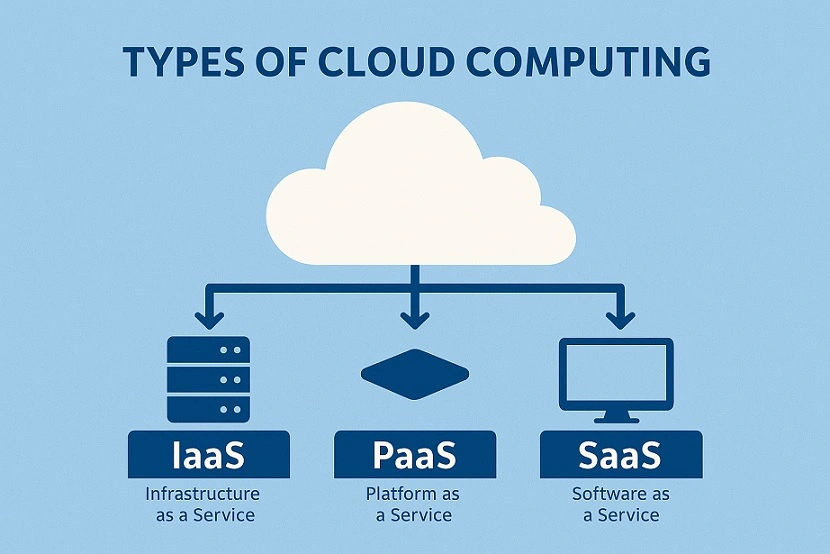
Types of Cloud Computing
1. Infrastructure as a Service (IaaS)
You rent virtual machines, storage, and networks. You manage the operating system and applications.
Examples: AWS, Google Cloud, Microsoft Azure
2. Platform as a Service (PaaS)
Provides tools and platforms for developers to build apps without managing servers.
3. Software as a Service (SaaS)
Software you access online without installation.
Examples: Gmail, Zoom, Canva, Dropbox
Cloud Deployment Models
1. Public Cloud
Available to everyone over the internet. Best for startups and students.
2. Private Cloud
Dedicated to one organization. Used by banks, enterprises, and governments.
3. Hybrid Cloud
Combination of public and private cloud. Most companies prefer this model.
Benefits of Cloud Computing
- Cost-Efficient: No need to buy expensive hardware.
- High Performance: Cloud services offer fast processing and optimized networking.
- Scalability: Increase or decrease resources instantly.
- Automatic Updates: Security patches and upgrades are handled automatically.
- Anywhere Access: Access your data anytime from any device.
- Backup & Recovery: Cloud providers store multiple copies of your data to prevent loss.
Everyday Examples of Cloud Computing
- Watching Netflix or YouTube
- Using WhatsApp or Gmail
- Saving files on Google Drive
- Editing documents in Office 365 or Google Docs
- Playing games with cloud-based services
Why Students Should Learn Cloud Computing
Students and the new generation frequently search cloud-related topics because it is one of the fastest-growing fields in the world. Cloud skills lead to high-paying jobs in DevOps, AI, cybersecurity, cloud engineering, and software development.
For more technical topics, you can also explore our guide on Cloud Networking.
Future of Cloud Computing
Cloud Computing is becoming the backbone of AI development, smart cities, 5G networks, autonomous vehicles, and advanced robotics. The future will depend heavily on cloud-driven automation, real-time analytics, and intelligent infrastructure.
Final Thoughts
Cloud Computing is not just a technology it is a foundation for modern life. From mobile apps to large-scale enterprises, the cloud powers everything around us. For students, professionals, and digital creators, learning cloud technology today opens the door to endless opportunities tomorrow.