
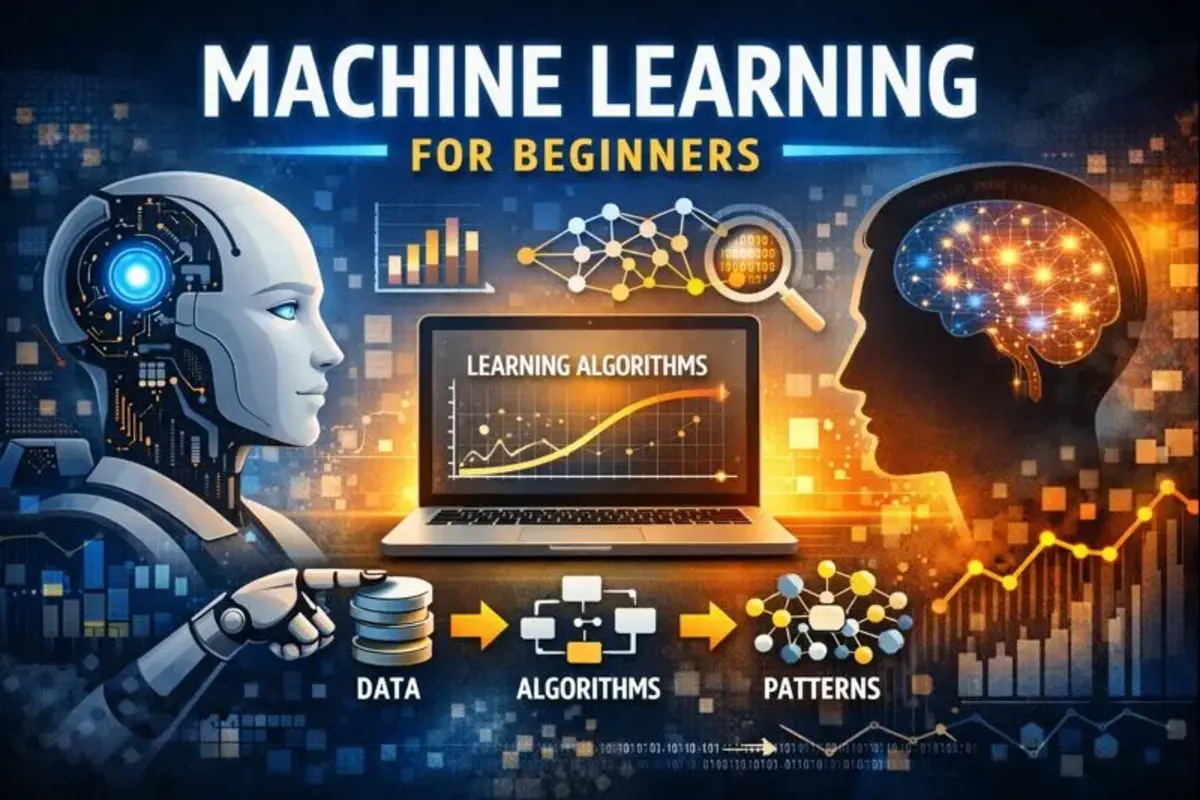
Machine Learning for Beginners is one of the most searched technology topics today. This Machine Learning for Beginners guide explains how machines learn from data, improve with experience, and power intelligent systems we use daily. To fully understand machine learning, it also helps to first know what Artificial Intelligence (AI) is , because machine learning is one of its most important branches.
This guide is written in a clear, human style. Whether you are a student or a curious learner, this article will explain machine learning step by step—without complex mathematics or confusing jargon.
Table of Contents
What Is Machine Learning?
Machine learning is a method that allows computers to learn from data and improve automatically with experience. Instead of writing fixed rules, developers train systems using examples so they can recognize patterns and make predictions.
Machine learning exists under the broader field of Artificial Intelligence , which focuses on building systems that perform tasks normally requiring human intelligence.
A Simple Example
When you teach a child to recognize animals, you show many pictures. Over time, the child notices patterns. Machine learning works the same way—except the learner is a computer trained on large datasets.
Why Machine Learning Is Important
The modern digital world produces massive amounts of data. Humans cannot analyze all of it manually. Machine learning helps process this data efficiently, making it valuable for prediction, automation, and intelligent decision-making.
- Processes large-scale data efficiently
- Improves accuracy over time
- Automates repetitive tasks
- Supports smarter digital systems
Real-World Applications of Machine Learning
Machine learning already impacts everyday life in ways most people don’t realize.
Recommendation Systems
Streaming platforms analyze viewing behavior and preferences. These systems often rely on data stored and processed using cloud computing , which provides the scalability required for machine learning models.
Spam Detection
Email platforms learn which messages are spam by studying patterns across millions of emails.
Smart Devices and Sensors
Connected devices generate huge streams of information. Machine learning combined with Internet of Things (IoT) technology allows systems to learn from sensor data and respond intelligently.
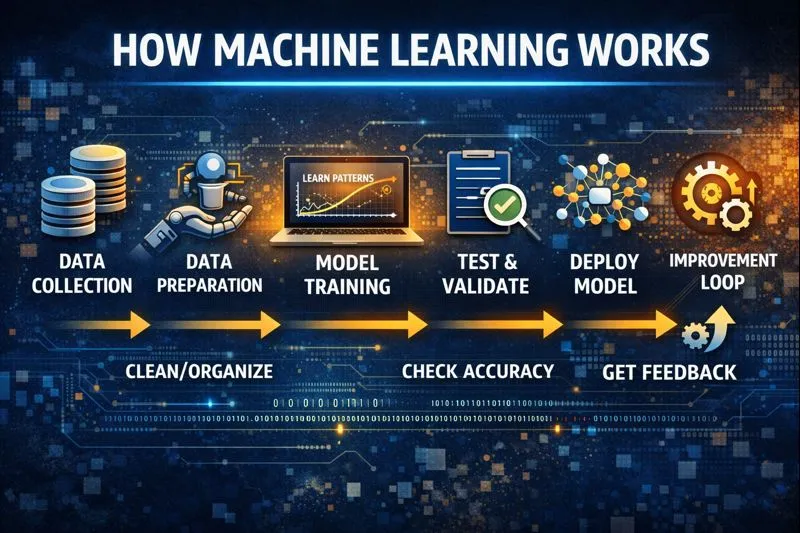
How Machine Learning Works
The machine learning workflow follows a logical cycle:
- Data collection
- Data cleaning and preparation
- Model training
- Testing and validation
- Deployment
- Continuous improvement
This entire process heavily depends on data availability, which is why understanding big data is essential when learning machine learning fundamentals.
Why This Machine Learning for Beginners Guide Matters
This Machine Learning for Beginners article is designed to remove confusion and explain complex ideas in a simple, human-friendly way. Beginners often struggle because of unnecessary technical language, and this guide focuses on clarity instead of complexity.
Main Types of Machine Learning
Supervised Learning
Supervised learning uses labeled data. The system learns by comparing predictions with known correct answers.
Unsupervised Learning
Unsupervised learning finds hidden patterns in unlabeled data, often used for clustering and segmentation.
Reinforcement Learning
This method teaches systems through rewards and penalties, commonly used in robotics and automated decision systems.
Machine Learning vs Traditional Programming
Traditional programming relies on fixed rules written by humans. Machine learning systems, on the other hand, learn rules directly from data, making them far more flexible for complex problems.
Skills Needed for Machine Learning Beginners
You do not need advanced mathematics at the start. Beginners should focus on understanding concepts, logic, and real-world applications before moving into technical depth.
- Basic logical thinking
- Understanding of data
- Problem-solving mindset
Common Myths About Machine Learning
- Machine learning is only for experts (false)
- It replaces humans entirely (false)
- It works perfectly without good data (false)
Challenges in Machine Learning
Machine learning systems face challenges such as biased data, overfitting, and lack of transparency. Understanding these limitations is crucial for responsible use.
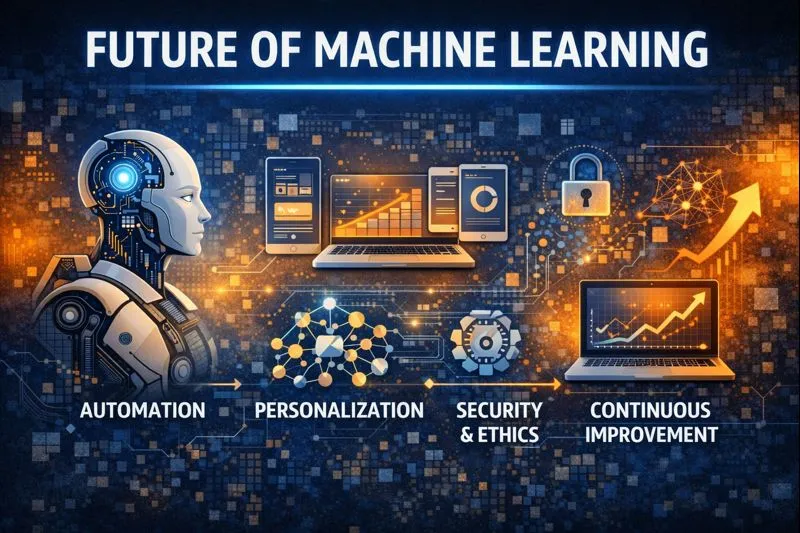
The Future of Machine Learning
Machine learning will continue to evolve, influencing automation, intelligent systems, and digital innovation. Those who understand its fundamentals will be better prepared for future technologies.
How to Start Learning Machine Learning
- Understand basic concepts clearly
- Learn how data is collected and prepared
- Study simple examples and case studies
- Practice consistently
Final Thoughts
Machine Learning for Beginners is about building understanding step by step. Once the foundation is clear, learning advanced topics becomes much easier. Machine learning is not magic—it is structured learning from data.
Explore more related topics in the Artificial Intelligence section on LookPK to continue your learning journey.
External learning resources (optional):