

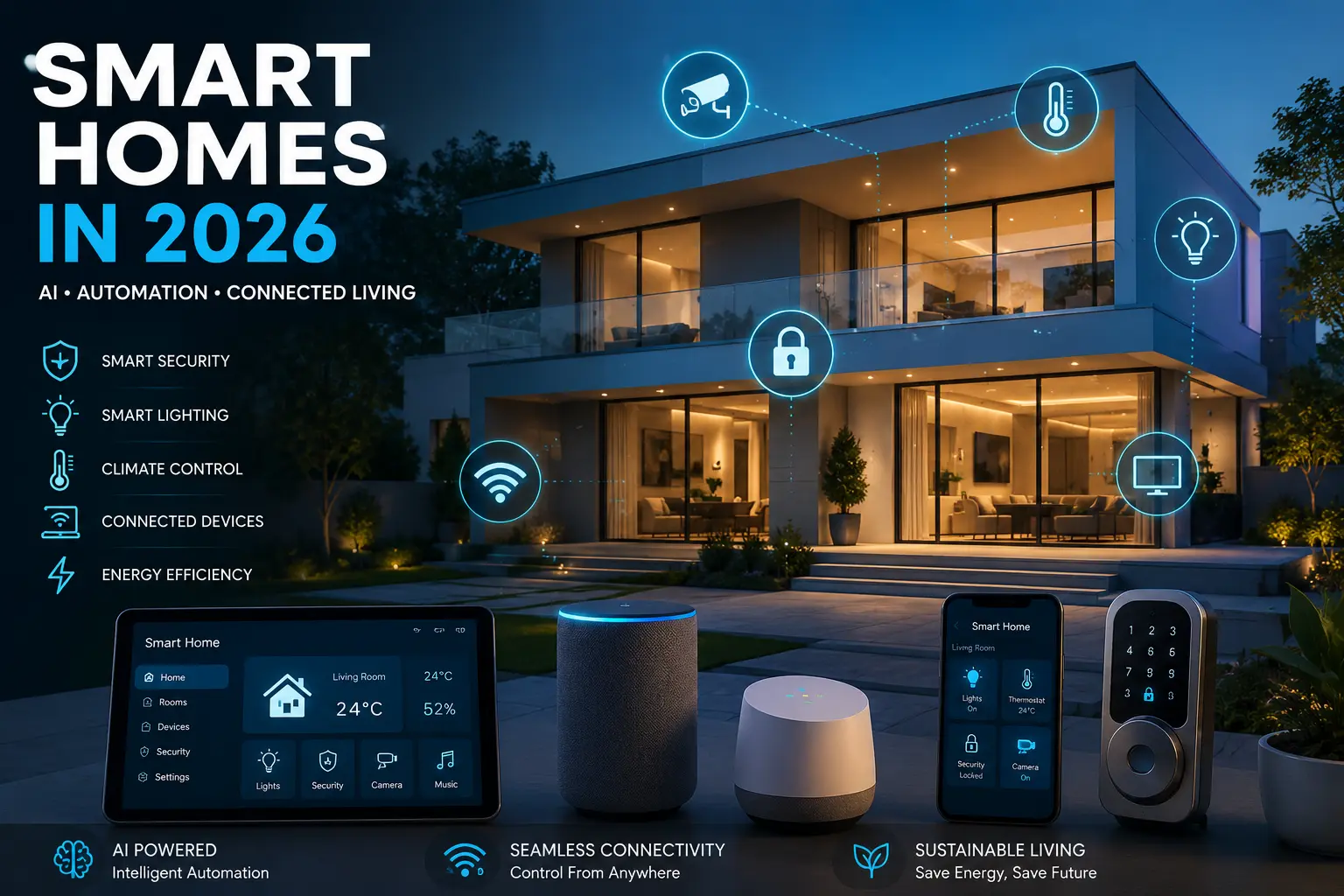
Smart homes are changing the way people live, work, and interact with technology. From voice-controlled lights to AI-powered security cameras, modern houses are becoming more intelligent, automated, and connected than ever before.
In 2026, this technology is no longer limited to luxury properties. It is becoming part of everyday life for students, families, professionals, and homeowners around the world.
The rise of artificial intelligence, Internet of Things, cloud computing, and 5G technology has accelerated the growth of connected home systems.
Table of Contents
What Is a Smart Home?
A smart home is a modern living space equipped with internet-connected devices that can communicate, automate tasks, and be controlled remotely. These devices work together to improve comfort, efficiency, and convenience.
This type of home commonly uses:
- Internet of Things devices
- Artificial intelligence
- Voice assistants
- Mobile applications
- Wireless networks
- Sensors and automation systems
Modern connected home ecosystems are also supported by industry standards like Matter Smart Home, which helps devices from different brands work together more efficiently.
How Connected Homes Work
Automated home systems work through connected devices that communicate using Wi-Fi, Bluetooth, Zigbee, or other wireless technologies. Users can control these devices through smartphones, tablets, smart speakers, or voice commands.
Popular platforms include Google Home and Amazon Alexa Smart Home.
For example, lights can turn on automatically when someone enters a room, digital door locks can be controlled remotely, and thermostats can adjust temperature based on user habits.
Popular Smart Home Devices
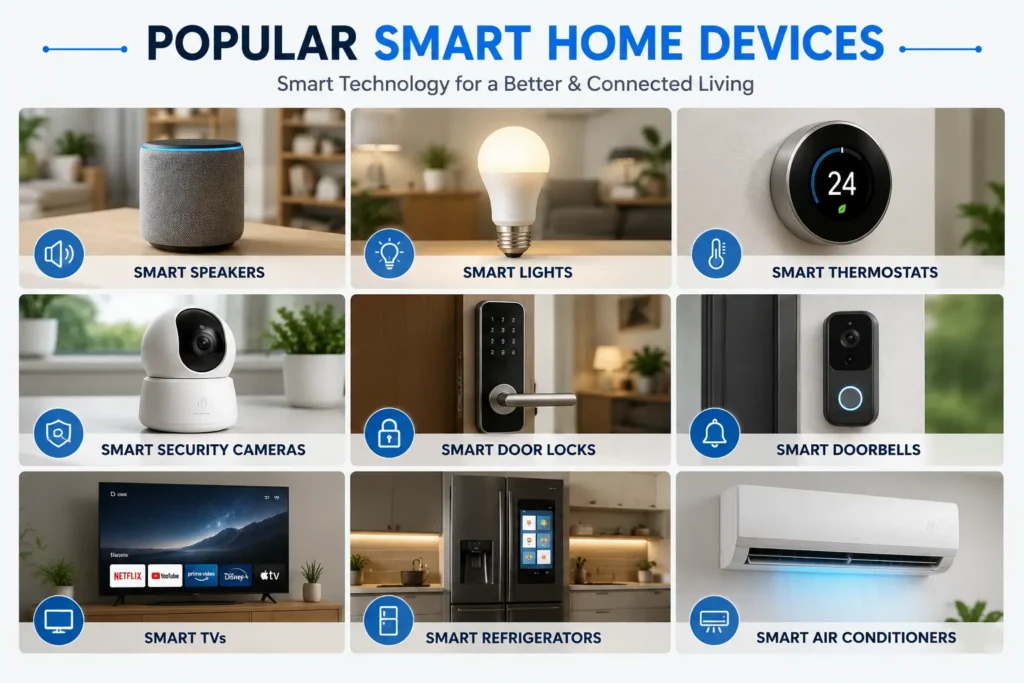
1. Smart Speakers
Smart speakers allow users to play music, ask questions, control devices, set reminders, and manage daily tasks using voice commands.
2. Smart Lights
Intelligent lighting systems allow users to control brightness, colors, schedules, and energy usage from a mobile app or voice assistant.
3. Smart Thermostats
Digital thermostats automatically manage home temperature according to user preferences, weather conditions, and energy-saving goals.
Many energy-efficient thermostats are certified by ENERGY STAR.
4. Smart Security Cameras
Connected cameras provide real-time monitoring, motion detection, night vision, mobile alerts, and cloud recording features.
5. Smart Door Locks
Digital locks allow users to unlock doors using smartphones, fingerprints, passcodes, or remote access permissions.
6. Smart TVs
Internet-enabled televisions connect to streaming platforms, gaming services, apps, and voice assistants for a complete entertainment experience.
7. Smart Kitchen Appliances
Connected refrigerators, ovens, and kitchen devices can monitor food, suggest recipes, send alerts, and improve cooking convenience.
8. Smart Air Conditioners
Modern air conditioners optimize cooling, reduce energy waste, and allow remote temperature control through mobile apps.
Benefits of Smart Homes
Convenience
Connected living makes daily life easier by automating lights, temperature, appliances, security, and entertainment systems.
Energy Efficiency
Automated devices reduce unnecessary energy use by turning off unused lights, appliances, and heating or cooling systems.
Remote Access
Users can control home devices from anywhere using mobile apps, even when they are away.
Improved Comfort
Automated living spaces create personalized environments based on user preferences, routines, and lifestyle needs.
Better Home Monitoring
Cameras, sensors, and video doorbells help users monitor their property in real time and receive instant alerts.
Support for Elderly and Disabled People
Voice control, automation, and remote monitoring can help elderly and disabled individuals live more independently.
AI and Automation in Modern Homes
Artificial intelligence is one of the most important technologies behind automated living. AI allows devices to learn user habits, predict needs, and complete routine tasks without manual input.
For example, an AI-powered home can automatically dim the lights during movie time, adjust the room temperature before bedtime, or turn off unused appliances to save electricity.
As robotics and automation continue to grow, future homes may include domestic robots, intelligent cleaning systems, and fully automated household assistants.
Energy Efficiency and Sustainable Living
Energy efficiency is one of the biggest advantages of connected home technology. Intelligent systems help reduce electricity waste by managing lighting, cooling, heating, and appliances more carefully.
Modern homes may also work with solar panels, smart batteries, and energy monitoring systems to reduce bills and support a more sustainable lifestyle.
Challenges of Connected Home Technology
Although automated homes offer many advantages, they also come with some challenges.
- High initial cost
- Internet dependency
- Device compatibility issues
- Privacy concerns
- Technical setup difficulties
Because connected homes depend on internet-enabled devices, users should also understand basic device safety and network protection. For more details, read our guide on IoT Security.
Future of Smart Homes
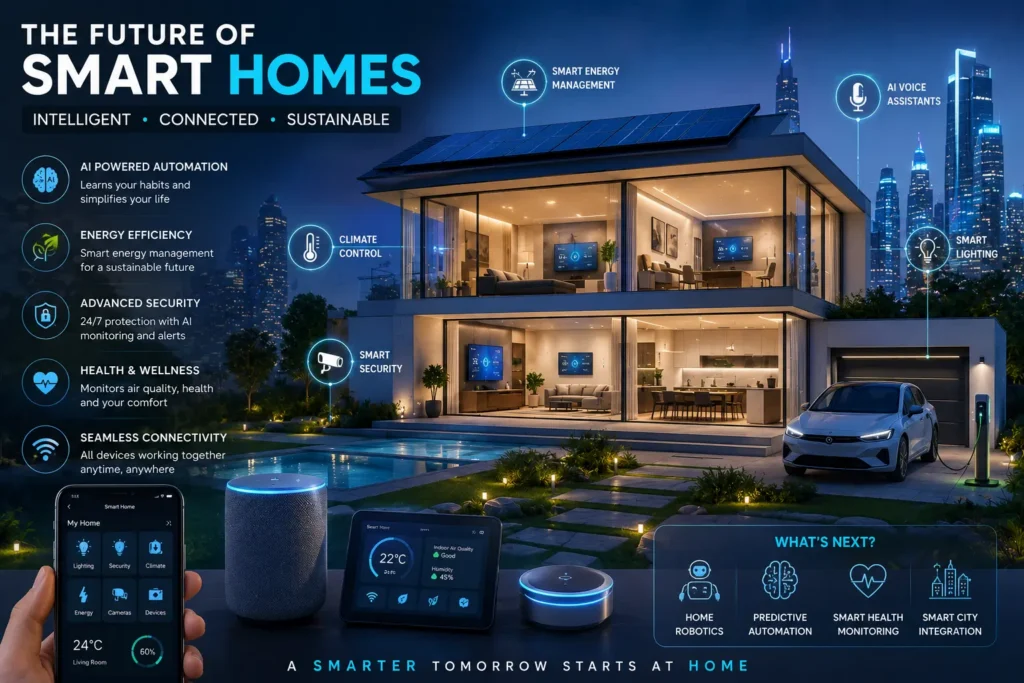
The future of smart homes will be highly connected, automated, and AI-driven. Future living spaces may include predictive automation, intelligent energy grids, advanced voice assistants, health monitoring systems, and integration with smart cities.
In the coming years, homes may automatically order groceries, manage electricity use, schedule maintenance, monitor air quality, and personalize indoor environments according to user needs.
With the growth of AI, IoT, 5G, and automation, connected home technology will become more affordable, intelligent, and common around the world.
Connected Living in Everyday Life
Modern home automation is already improving daily life in many ways. Families use cameras for security, students use voice assistants for study support, professionals use automation for productivity, and homeowners use intelligent systems to reduce energy costs.
This technology is not only about luxury. It is about creating safer, more efficient, and more comfortable living spaces for modern life.
FAQs About Smart Homes
What is a smart home?
A smart home is a house equipped with internet-connected devices that automate and control household functions such as lighting, temperature, security, and appliances.
What devices are used in automated homes?
Common devices include smart lights, speakers, cameras, locks, TVs, thermostats, and connected kitchen appliances.
Are connected homes expensive?
Costs depend on the number and type of devices used. Basic setups can be affordable, while advanced systems may require higher investment.
Do automated homes save electricity?
Yes, they can reduce electricity waste by managing lighting, cooling, heating, and appliance usage more efficiently.
Can connected devices work without internet?
Some basic functions may work locally, but most advanced features require an internet connection.
What is the future of home automation?
The future includes AI-powered automation, robotics, smart energy systems, health monitoring, and deeper integration with smart cities.
Conclusion
Smart homes are revolutionizing modern living by combining automation, artificial intelligence, and connected devices into one intelligent ecosystem. From lighting and thermostats to AI-powered assistants and automated security systems, this technology continues to improve comfort, efficiency, and convenience.
As technology evolves, connected homes will become more affordable, intelligent, and deeply integrated into everyday life. The future of digital living promises better energy management, personalized experiences, and highly connected environments powered by AI and next-generation networks.
In 2026 and beyond, intelligent home technology is expected to play a major role in shaping digital lifestyles, smart cities, and connected living worldwide.