
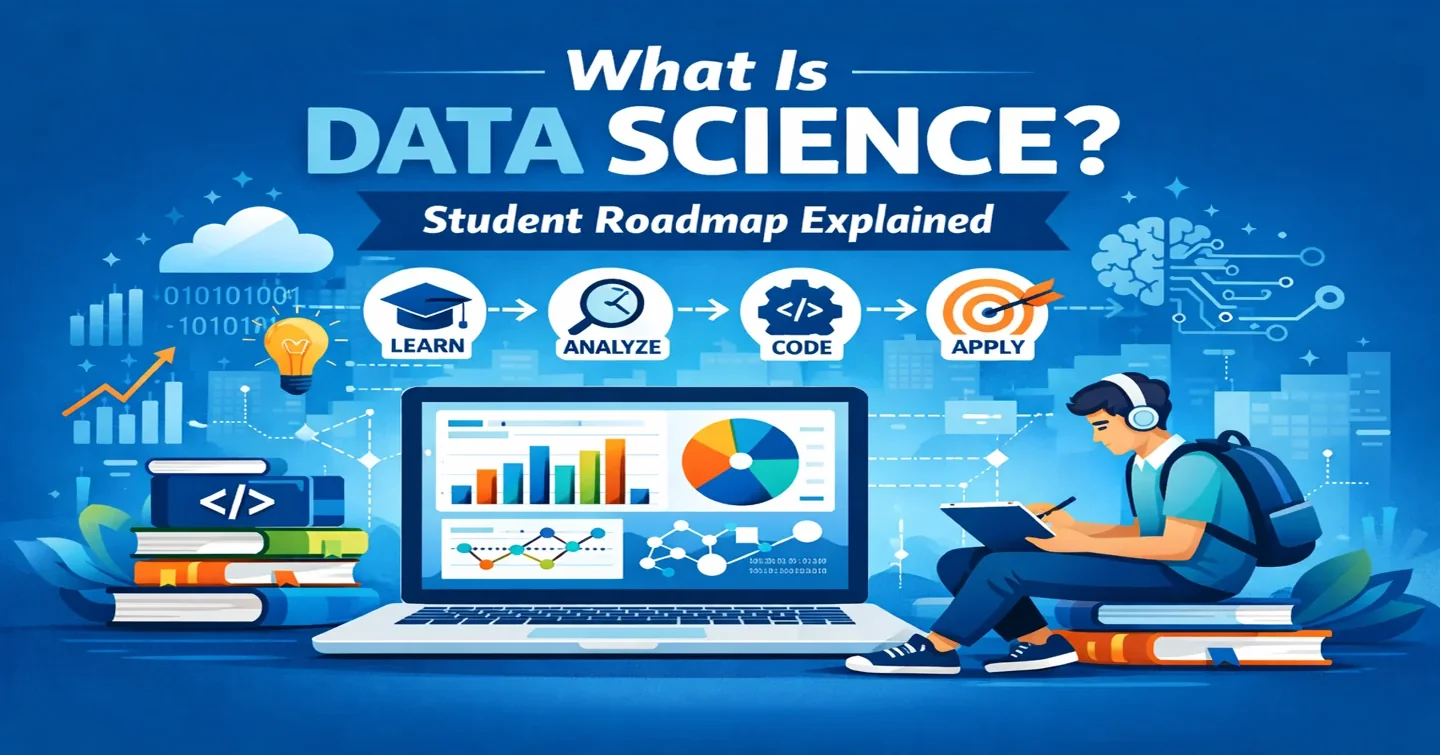
What is Data Science? This question is being asked by students across the world as data-driven technologies reshape careers, businesses, and entire industries. In simple terms, data science is the discipline of converting raw data into meaningful insights, predictions, and decisions using statistics, programming, and analytical thinking.
For students planning a future in technology, understanding what is data science and following a structured learning path is no longer optional. Data science now sits at the center of innovation, closely connected with Artificial Intelligence (AI), Machine Learning, and Cloud Computing.
Table of Contents
What Is Data Science and Why Should Students Learn It?
To truly understand what is data science, students must look beyond definitions and focus on application. Data science is not just about numbers or coding—it is about solving real-world problems using data-driven evidence.
According to IBM, data science combines statistics, computing, and domain expertise to analyze data and support intelligent decision-making: IBM – What Is Data Science.
From predicting disease risks to detecting online fraud, data science enables organizations to act with confidence instead of guesswork.
Why Data Science Matters in the Modern World
Understanding what is data science becomes easier when we see its impact. Nearly every digital service today depends on data-driven intelligence.
- Streaming platforms recommend content using data science models
- Banks detect fraud through predictive analytics
- Hospitals improve diagnosis using data patterns
- Governments analyze population data for better planning
Coursera highlights data science as one of the fastest-growing career domains globally: Coursera – What Is Data Science?
Students already exploring emerging technologies on LookPK will find data science a natural extension of their learning journey.
Is Data Science Only for Programmers?
No. A common myth is that only expert programmers can succeed in data science. In reality, students from mathematics, statistics, engineering, economics, and even social sciences can build strong careers in data science.
Programming is a tool—not the destination. The real skill lies in analytical thinking, asking the right questions, and interpreting results responsibly.
Harvard Business Review famously described data science as one of the most valuable modern professions: Harvard Business Review – Data Scientist
What Data Scientists Actually Do
To clearly explain what is data science, it helps to understand the daily workflow of a data scientist:
- Define the business or research problem
- Collect data from multiple sources
- Clean and prepare raw data
- Perform exploratory data analysis (EDA)
- Build statistical or machine learning models
- Evaluate accuracy and reliability
- Deploy models and monitor results
This process explains why data science overlaps strongly with machine learning concepts discussed in Machine Learning for Beginners.
Core Skills Required to Learn Data Science
1. Statistics and Mathematics
Statistics is the backbone of data science. Probability, distributions, hypothesis testing, and regression are essential concepts.
For students, Khan Academy offers a reliable foundation: Khan Academy – Statistics & Probability
2. Programming (Python & SQL)
Python is the most widely used language in data science due to its simplicity and rich ecosystem. SQL is essential for querying structured data.
A practical Python learning path: Real Python – Data Science with Python
3. Data Cleaning and Preparation
Real-world data is messy. Cleaning data consumes a large portion of a data scientist’s time and determines result accuracy.
IBM explains the importance of this stage: IBM – Data Preparation
4. Exploratory Data Analysis (EDA)
EDA helps students identify patterns and anomalies before modeling.
Recommended reading: Exploratory Data Analysis Explained
5. Machine Learning Fundamentals
Machine learning allows systems to learn from data automatically.
Beginner-friendly course: Google Machine Learning Crash Course
Roadmap for Students: How to Learn Data Science Step by Step
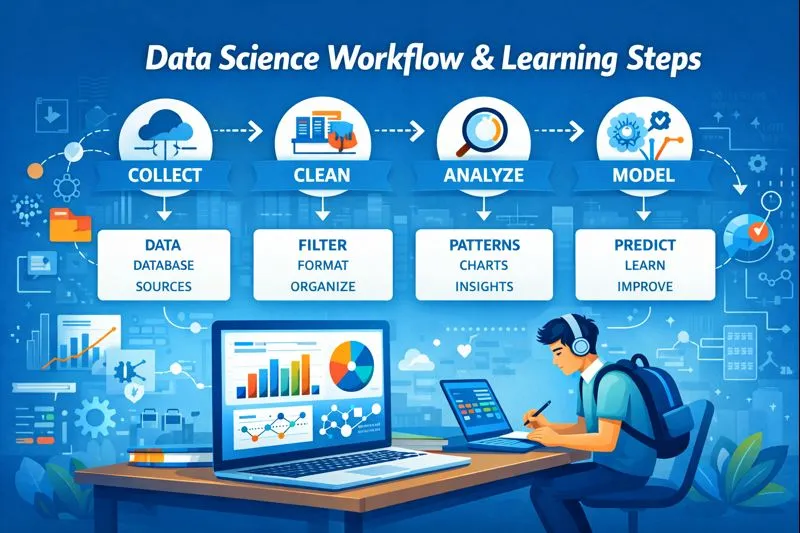
This roadmap is designed to give students a practical answer to what is data science and how to build a career in it.
Stage 1: Foundations (Months 1–3)
- Basic statistics and probability
- Logical reasoning
- Computer fundamentals
Networking and IT fundamentals also support this stage. See: What Is a Computer Network?
Stage 2: Programming Skills (Months 3–6)
- Python basics
- SQL queries
- Data manipulation
Stage 3: Data Analysis & Visualization (Months 6–8)
- Data cleaning
- Charts and plots
- Insight reporting
Stage 4: Machine Learning (Months 8–12)
- Regression & classification
- Model evaluation
- Overfitting vs underfitting
Stage 5: Projects & Portfolio (Months 10–18)
Employers value projects more than certificates.
Dataset source: Kaggle Datasets
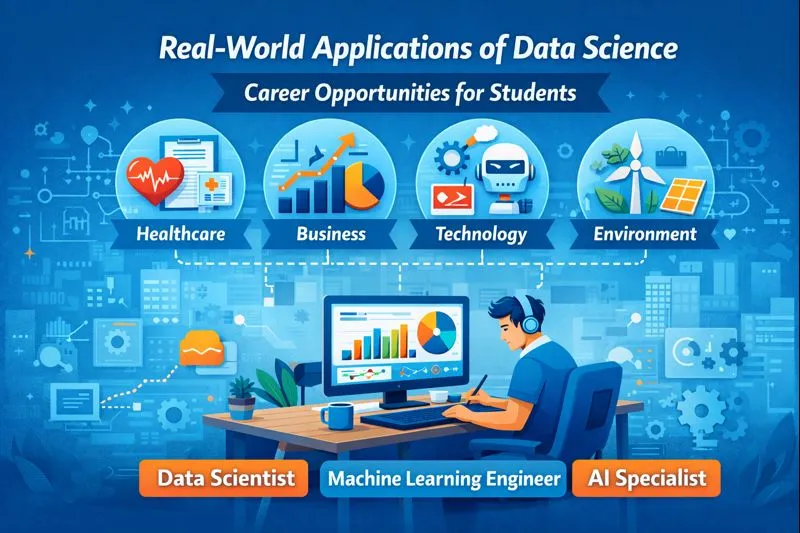
Career Paths in Data Science
- Data Analyst
- Data Scientist
- Machine Learning Engineer
- Business Intelligence Analyst
Job outlook reference: U.S. Bureau of Labor Statistics – Data Scientists
Ethics and Responsibility in Data Science
Understanding what is data science also means understanding responsibility. Data misuse can cause harm.
Global ethical framework: OECD AI Principles
Final Thoughts for Students
Many students ask what is data science and whether it is worth learning. The answer is clear: data science is one of the most valuable and future-proof skills in modern technology.
If you build strong fundamentals, practice consistently, and apply ethical thinking, data science can open doors across industries worldwide.
Continue strengthening related skills through LookPK resources such as:
- What Is Artificial Intelligence?
- Machine Learning for Beginners
- What Is Cloud Computing?
- Blockchain Technology Explained
Bottom line: Learn deeply, build honestly, and treat data responsibly. That is how careers in data science are built.
Frequently Asked Questions About Data Science
What is Data Science in simple words?
Data science is the practice of collecting, cleaning, and analyzing data to discover patterns and make better decisions using statistics and computer programming.
Is data science good for students?
Yes. Data science is one of the best career choices for students because it offers strong job demand, high salaries, and opportunities across many industries.
How long does it take to learn data science?
For most students, it takes 12 to 18 months to build solid data science skills with consistent practice and real-world projects.
Do I need a computer science degree to learn data science?
No. Students from mathematics, statistics, engineering, business, and science backgrounds can successfully learn data science.
What skills are required to become a data scientist?
Key skills include statistics, Python programming, data analysis, machine learning basics, and clear communication of insights.